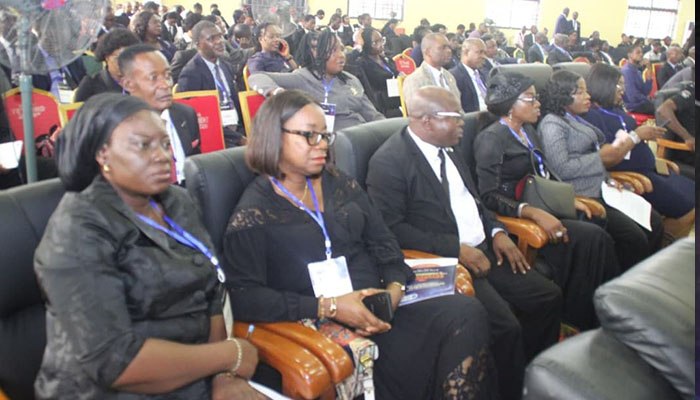
Alex Ekwueme Federal University, Ndufu-Alike (AE-FUNAI), Ebonyi State, recently hosted leading jurists, seasoned academics, policymakers and technology experts at its Faculty of Law 2nd International Law Conference, where participants called for stronger legal frameworks, ethical use of artificial intelligence and greater African participation in shaping the global digital order.
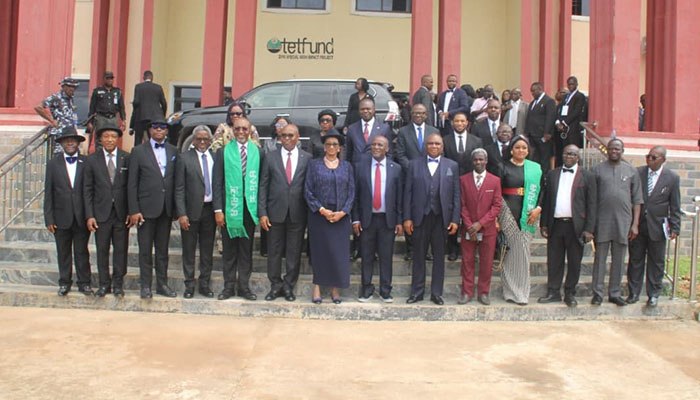
The conference, themed “Sovereignty 2.0: Law, Technology and Power in a Fragmented World,” examined the growing impact of artificial intelligence on governance, democracy, justice, national sovereignty and global power relations, with speakers advocating collaborative approaches to ensure technological advancement, promotion of human rights, accountability, security and sustainable development.
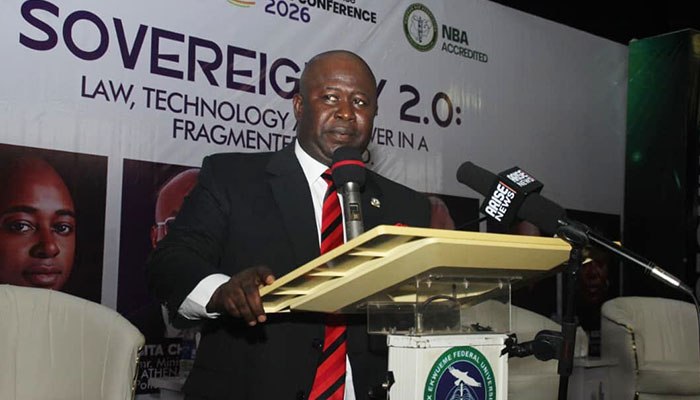
The Executive Governor of Ebonyi State, Hon. Francis Ogbonna Nwifuru, represented by the Attorney-General and Commissioner for Justice, Dr. Ben Uruchi Odoh, urged Nigeria and Africa to embrace digital sovereignty, ethical AI governance, and technology-driven development while safeguarding democracy, justice, privacy, and human rights.
The Governor emphasized the need for robust legal frameworks, investment in education and innovation, and increased African participation in shaping the global digital future. He also highlighted Ebonyi State’s investments in education through scholarships, ICT training, and judicial reforms.
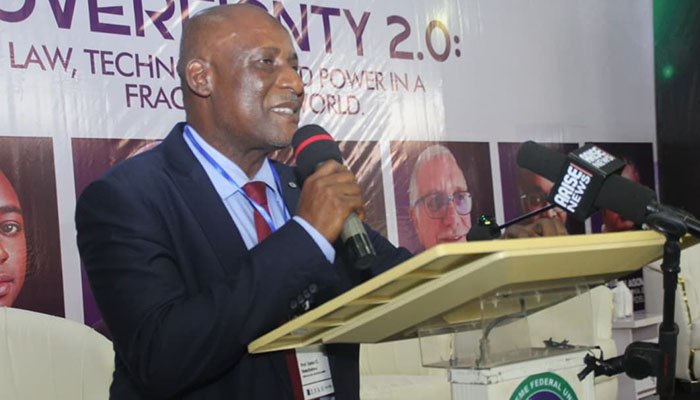
The Vice-Chancellor of the university, Prof. Daniel Nwachukwu, stated that the growing influence of artificial intelligence and digital technologies is reshaping sovereignty, governance, and global power relations. He stressed the importance of stronger legal frameworks and responsible regulatory approaches.
He also highlighted the role of universities in advancing research and innovation while promoting ethical technology use, and called for greater collaboration among governments, scholars, and policymakers to address challenges related to data sovereignty, cybersecurity, and digital inclusion.
Prof. Nwachukwu expressed optimism that the conference would yield valuable policy recommendations for balancing technological advancement with legal accountability, national development, and global stability.
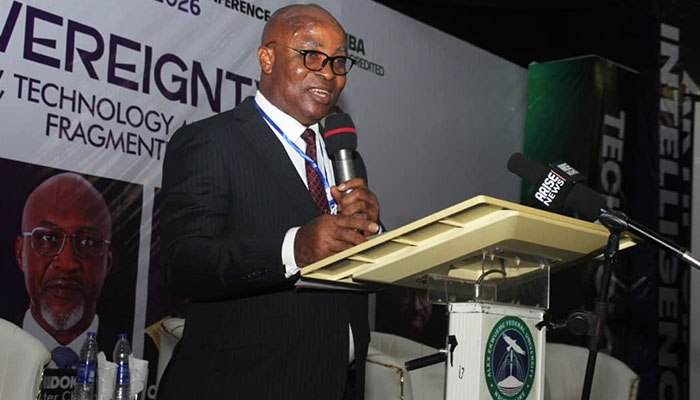
Hon. Justice Elvis Ngene, the Chief Justice of Ebonyi State who chaired the occasion emphasized that sovereignty in the 21st century extends beyond territorial boundaries to include cyber-sovereignty, data sovereignty, and digital jurisdiction.
He noted the transformative potential of artificial intelligence in governance, security, and economic development, while also cautioning against risks such as surveillance, manipulation, and cyber conflict.
He called for globally interoperable standards on AI transparency, accountability, and safety, rooted in human rights, and supported by international cooperation, and advocated for the inclusive participation of developing nations, civil society, and marginalized groups in shaping AI governance, stressing that technological advancement must be guided by the rule of law, human dignity, and equitable global development.
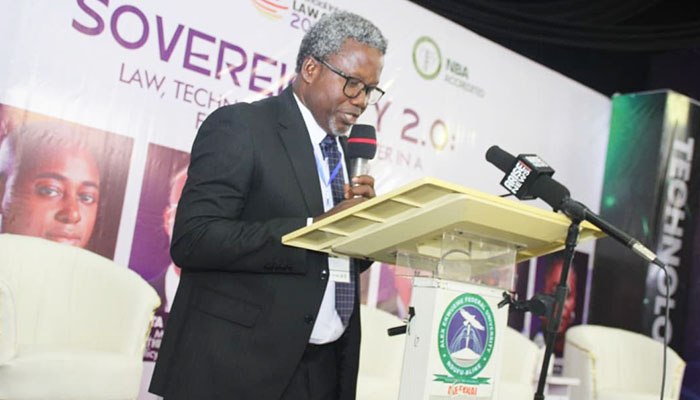
Earlier, Prof. Eseni Azu Udu, Dean of the Faculty of Law, described the conference theme, “Sovereignty 2.0: Law, Technology, and Power in a Fragmented World,” as timely and relevant in an era shaped by artificial intelligence, digital technologies, and evolving global power dynamics.
He highlighted the Faculty’s impressive achievements in legal scholarship, moot court competitions, and professional development, including its 100% success rate in the 2026 Nigerian Bar Part I examinations.
While celebrating the Faculty’s growing national and international reputation, he urged participants to use the conference as a platform for rigorous intellectual engagement on the future of law, technology, and governance.
Dr. Kelechi Onyegbule, the Chairman Organizing Committee, noted that rapid advancements in artificial intelligence and digital technologies were transforming the meaning of sovereignty, governance, and power in today’s fragmented global order. He stressed that nations must strengthen their legal and institutional frameworks to address challenges arising from data governance, cybersecurity, and technological dependence while fostering collaboration among scholars, policymakers, and technology experts.
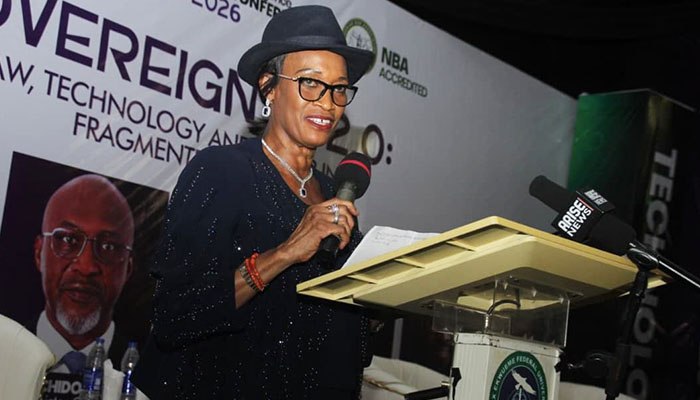
While delivering the keynote speech, Hon. Justice Helen Moronkeji Ogunwumiju of the Supreme Court of Nigeria, advocated for the responsible adoption of artificial intelligence in the judiciary to reduce case backlogs, improve efficiency, and expand access to justice.
She noted that AI can assist judges through legal research, case management, and document analysis, but emphasized that it must never replace human judgment. While acknowledging the technology’s potential to transform judicial administration, Justice Ogunwumiju warned against overreliance on algorithmic decision-making, citing concerns about transparency, privacy, accountability, and fairness.
She further emphasized that justice involves human values, empathy, and legitimacy qualities that AI cannot fully replicate.
A former Minister of Aviation, Chief Osita Chidoka, who spoke on “From Territorial to Algorithmic Sovereignty: Democracy, Power, and the African State in the Age of Artificial Intelligence,” explained that global power is shifting from territorial control to control over data and algorithms. And warned that tech companies are gaining influence typically held by governments, posing risks for democracy and national sovereignty.
Chidoka highlighted Africa’s historical disadvantage due to late participation in technology and cautioned against a new form of dependence in the AI era. He called for democratic digital sovereignty through improved data governance, transparent AI regulations, regional collaboration, and investment in digital infrastructure to ensure Africa can shape the rules of the algorithmic age.
Concluding, he announced plans to provide data to the university, fully funded by TETFund, which students will be able to access to enhance their studies
The conference cements the reputation of Alex Ekwueme Federal University Ndufu-Alike, Ebonyi state, as a destination for impactful conferences and other engaging research activities.