
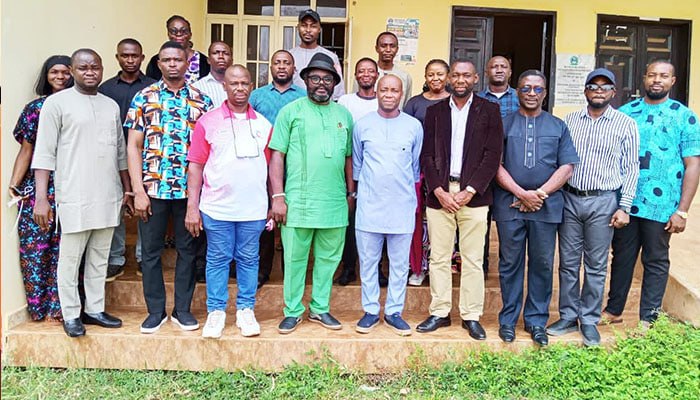
The Faculty of Basic Medical Sciences, Alex Ekwueme Federal University Ndufu-Alike, Ikwo, (AE-FUNAI), has strengthened its commitment to research excellence and capacity development through a Faculty Series/Workshop on Scientific Communication and Grant Writing, organised as part of the post-placement activities of the African Research Excellence Fund (AREF).
The workshop, held at the Faculty Conference Hall, was themed “Scientific Communication and Grant Writing: The Pathway for Early-Career Scientists.” It was designed to equip emerging researchers with essential competencies in scientific communication, research proposal development, and grant acquisition, thereby enhancing their capacity to undertake impactful research and compete for research funding.
The workshop facilitated by Dr Chinedu O Egwu, an AREF fellow, who leveraged the knowledge, skills and professional experiences acquired through the AREF fellowship to promote research capacity development and knowledge sharing within the University. The initiative reflects the importance of translating international research training and professional development experiences into meaningful institutional impact, particularly through mentoring, academic engagement and the strengthening of research competencies among early-career researchers (ECR).
Speaking on the theme, the Dean of the Faculty of Basic Medical Sciences, Prof. Ogugua Egwu, highlighted the importance of scientific communication and grant writing as indispensable tools for building successful academic and research careers.
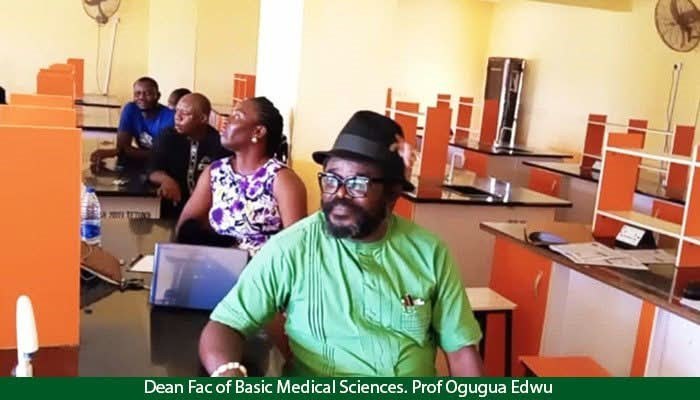
He emphasized that beyond acquiring knowledge and conducting research, scientists must develop the ability to communicate their findings effectively and translate research ideas into well-structured proposals capable of attracting funding and addressing critical societal needs.
The Dean further noted that securing research grants is particularly important for ECR, as access to funding creates opportunities to advance scientific investigations, strengthen research capacity and establish productive academic collaborations. He encouraged young researchers to acquire the necessary competencies to remain relevant and competitive in the increasingly demanding global research environment.
Delivering the first lecture, Prof. Robert Onyeneke spoke on “Effective Scientific Communication,” highlighting the central role of communication in the research process.
He explained that scientific research becomes more valuable when its findings are effectively communicated, noting that the ability to present research outcomes clearly and convincingly is essential for knowledge dissemination, academic visibility and the advancement of scientific understanding.
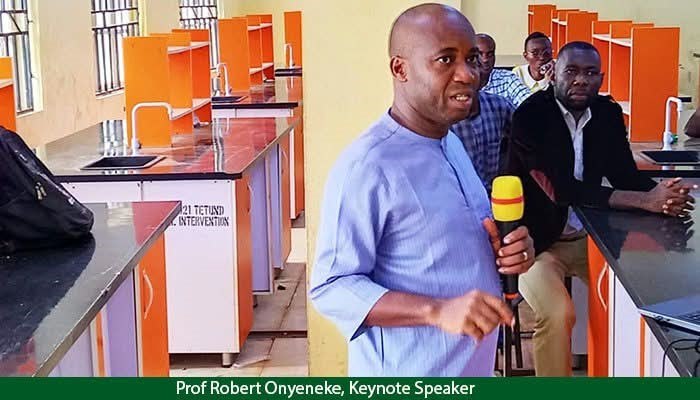
He stressed that effective scientific communication requires clarity of thought, logical presentation, accuracy and the ability to convey complex scientific information in ways that are accessible to the intended audience.
Prof, Onyeneke underscored the importance of developing strong scientific writing and presentation skills, particularly in preparing research manuscripts, conference papers and other scholarly publications and also encouraged early-career scientists to take scientific communication seriously for further research opportunities.
Prof Alfred Amambua-Ngwa from the Medical Research Unit, The Gambia at the London School of Hygiene and Tropical Medicine who spoke on “Building a Successful Scientific Career in Africa,” stressed the importance of scientific rigour and the need to show preliminary data to increase winnability in grantsmanship in Africa.
Prof. Ngwa, through a virtual presentation, encouraged early-career researchers (ECRs) to draw inspiration and guidance from established scientific leaders across Africa, spanning different countries and fields of specialisation. He emphasized the need for African researchers to look inward, leverage the continent’s existing expertise and resources, and harness indigenous knowledge to drive research, innovation, growth and development both within Africa and beyond. He also highlighted several grant opportunities specifically suited to early-career researchers to support their research activities and professional development.
The workshop further highlighted the importance of AREF post-placement activities in ensuring that the knowledge, skills and experiences gained during fellowships translate into lasting benefits for researchers’ home institutions. It emphasized the role of AREF-supported researchers in promoting knowledge transfer, mentoring emerging scholars, strengthening institutional research capacity, and fostering a sustainable and vibrant research culture within their respective institutions.
The Faculty Series/Workshop represents an important initiative by the Faculty of Basic Medical Sciences, AE-FUNAI, towards promoting research excellence, encouraging intellectual engagement and strengthening the research competencies of its academic community.
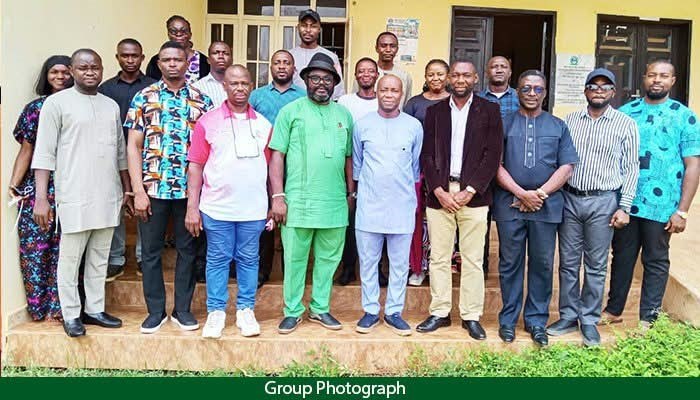
By bringing together experienced academics and emerging researchers, the initiative reinforces the Faculty’s commitment to nurturing a new generation of scientists capable of producing high-quality scientific knowledge, attracting competitive research funding and contributing meaningfully to national and global scientific development.
