
The Department of Linguistics and Nigerian Languages, Alex Ekwueme Federal University Ndufu-Alike (AE-FUNAI), in collaboration with the Society for Igbo Studies (SIS), has hosted its 2nd international conference themed “Tech Meets Tongue: Indigenous Knowledge and Future Innovations”
It was a scholarly gathering of academics, researchers, language experts, and cultural enthusiasts from diverse field of studies, to deliberate on the relevance of indigenous languages and knowledge systems in the age of technological advancement.

Professor Daniel Nwachukwu, while declaring the event held at the Theatre Arts auditorium open, described the conference as timely and highly significant, considering the increasing global interest in indigenous knowledge and artificial intelligence.
‘‘It challenges us to reposition indigenous languages not as a relic of the past, but as vital tools for shaping the future of technology, creativity, and national development’’ he said.
He stressed that AE-FUNAI, is deeply committed to this vision through the IRUKA Centre, which serves as the center for the study of the Future of Igbo with high research drive and digital innovation that ensures Igbo thrive in modern technological spaces-from Artificial Intelligence and language processing to digital content.
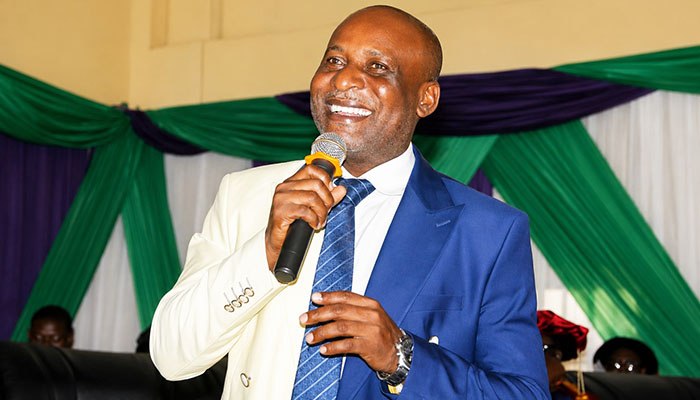
The Vice-Chancellor, who said that universities have a responsibility not only to preserve cultural heritage but also to transform indigenous knowledge into valuable resources for education, innovation, entrepreneurship, and sustainable development, further stressed that his administration remains supportive to worthy causes and building strategic collaborations to advance the growth of the Igbo language, culture and heritage.
He opined that technology should serve as a platform for strengthening indigenous languages rather than replacing them, and commended the Department and the Society for Igbo Studies for providing a platform that promotes academic excellence and cultural preservation.
Presenting the lead paper of the conference, Professor Monday C. Onukawa who spoke extensively on “Tech Meets Tongue: Indigenous Knowledge and Future Innovations” underscored the indispensable role of indigenous knowledge system in shaping sustainable development and driving future innovation.
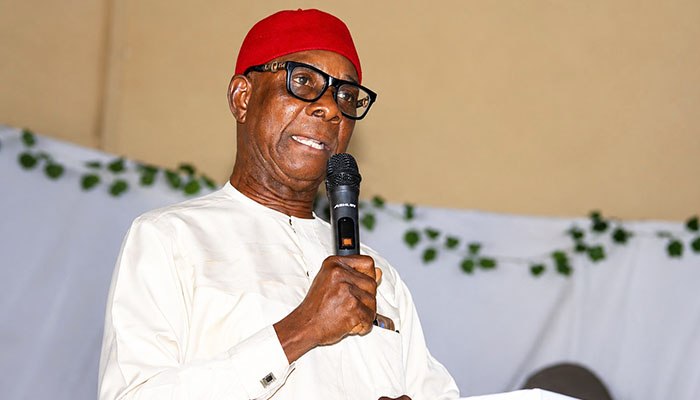
Examining the relationship between technological advancement and indigenous languages, arguing that both can coexist to achieve sustainable development, Professor Onukawa, explained that indigenous languages should not be viewed as relics of the past but as valuable intellectual assets capable of driving innovation in education, healthcare, governance, agriculture, and digital communication.
He further explained that meaningful innovation should not be driven solely by modern science and technology but should also draw strength from indigenous knowledge which offers context-specific, environmentally sustainable, and culturally relevant solutions. He stressed that integrating indigenous knowledge with contemporary research would foster creativity, preserve cultural heritage, and address pressing societal challenges more effectively.
He therefore, advocated greater investment in language technology, including language documentation, artificial intelligence, machine translation, digital dictionaries, speech recognition systems, and educational software developed in indigenous languages, as he urged governments, educational institutions, and technology developers to collaborate in ensuring that African languages remain relevant in the digital economy.
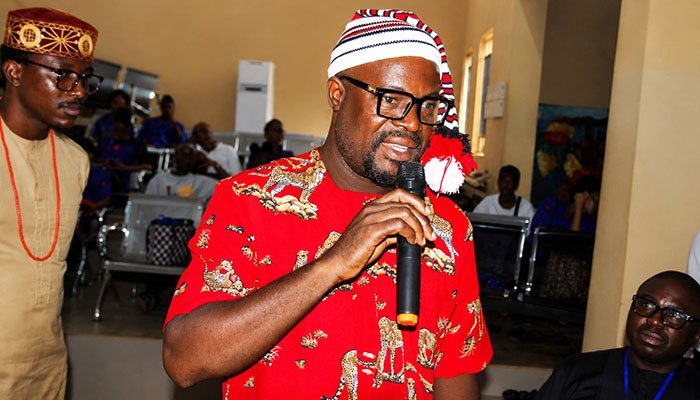
Delivering the keynote address on “Indigenous Knowledge and Future Innovation: An Epistemological Perspective,” Dr. Sopuruchi Abo scrutinized indigenous knowledge as a legitimate and dynamic system of knowing capable of addressing contemporary global challenges as he asserted that African indigenous knowledge embodies centuries of accumulated experience in medicine, environmental management, conflict resolution, agriculture, education, and community development.
He challenged the conventional assumptions that knowledge is derived exclusively from Westernscientific traditions, stressing that epistemology- the philosophical study of nature, sources, and limits knowledge- provides a framework for understanding the value and legitimacy of indigenous knowledge system.
Dr. Abo explained indigenous knowledge as the cumulative wisdom, beliefs, skills, and practices developed by communities over generations through observation, experience and interaction with their environment. He maintained that these knowledge systems are capable of addressing contemporary challenges in areas such as agriculture, healthcare, environmental conservation, conflict resolution and cultural preservation.
He emphasized that sustainable innovation cannot rely solely on imported knowledge systems but must incorporate indigenous epistemologies that reflect local realities and cultural values as he called for increased investment in indigenous research, digital preservation of oral traditions, and curriculum reforms that recognize indigenous knowledge as an essential component of higher education and scientific inquiry.
Also speaking, the Dean of the Faculty of Arts, Professor Arua O. Omaka, observed that language remains the foundation of every civilization and a vital instrument for preserving the values and identity of every people. He encouraged participants to utilize the conference as an avenue for intellectual engagement, interdisciplinary collaboration, and innovative research capable of addressing contemporary societal challenges, and reaffirmed the faculty’s commitment to supporting research initiatives that promote African languages and indigenous knowledge systems.
The Head of the Department, Professor Ifeoma Nweze, in her welcome address, described the conference as a landmark event for the department and the Society for Igbo Studies, noting that the conference theme aptly reflects the urgent need to bridge indigenous knowledge with modern technological innovations.
She emphasized that indigenous languages are repositories of cultural identity, traditional wisdom, and intellectual heritage that must not be neglected in the digital age.
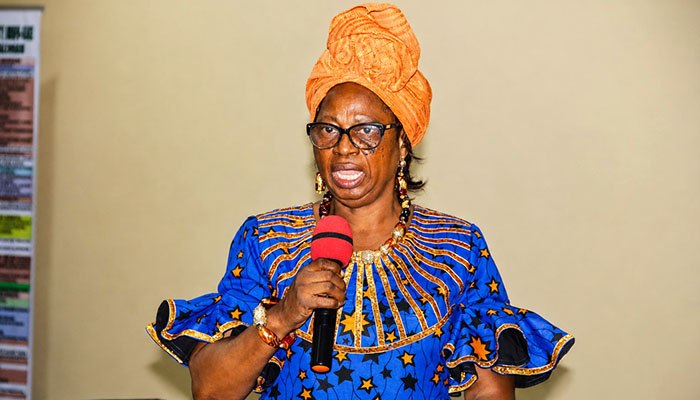
Professor Nweze urged scholars to develop innovative approaches for documenting, preserving, and digitizing Nigerian languages while encouraging meaningful collaboration among researchers across disciplines even as she expressed optimism that the conference would generate practical recommendations capable of influencing language policy, research, and technological development.
In his goodwill message, the President and Coordinator of the Society for Igbo Studies, Dr. Gerald O. Nweya, reaffirmed the Society’s commitment to promoting Igbo language, literature, culture, and scholarship across the globe, adding that preserving indigenous languages requires collective responsibility involving government’suniversities, communities, and technology experts. He expressed confidence that the conference would inspire renewed research collaborations and practical initiatives for safeguarding Nigeria’s linguistic heritage.
The Conference reinforced the need for stronger collaboration between academia, policymakers, technology experts, and cultural institutions in preserving indigenous heritage while embracing innovation, thereby positioning African languages as indispensable tools for sustainable development in the twenty first century.
